You Haven’t Lost Yourself. You’re Becoming Someone New: Understanding Matrescence
There’s a word that doesn’t get nearly enough airtime in Irish antenatal classes, GP waiting rooms, or postnatal check-ups. That word is matrescence.
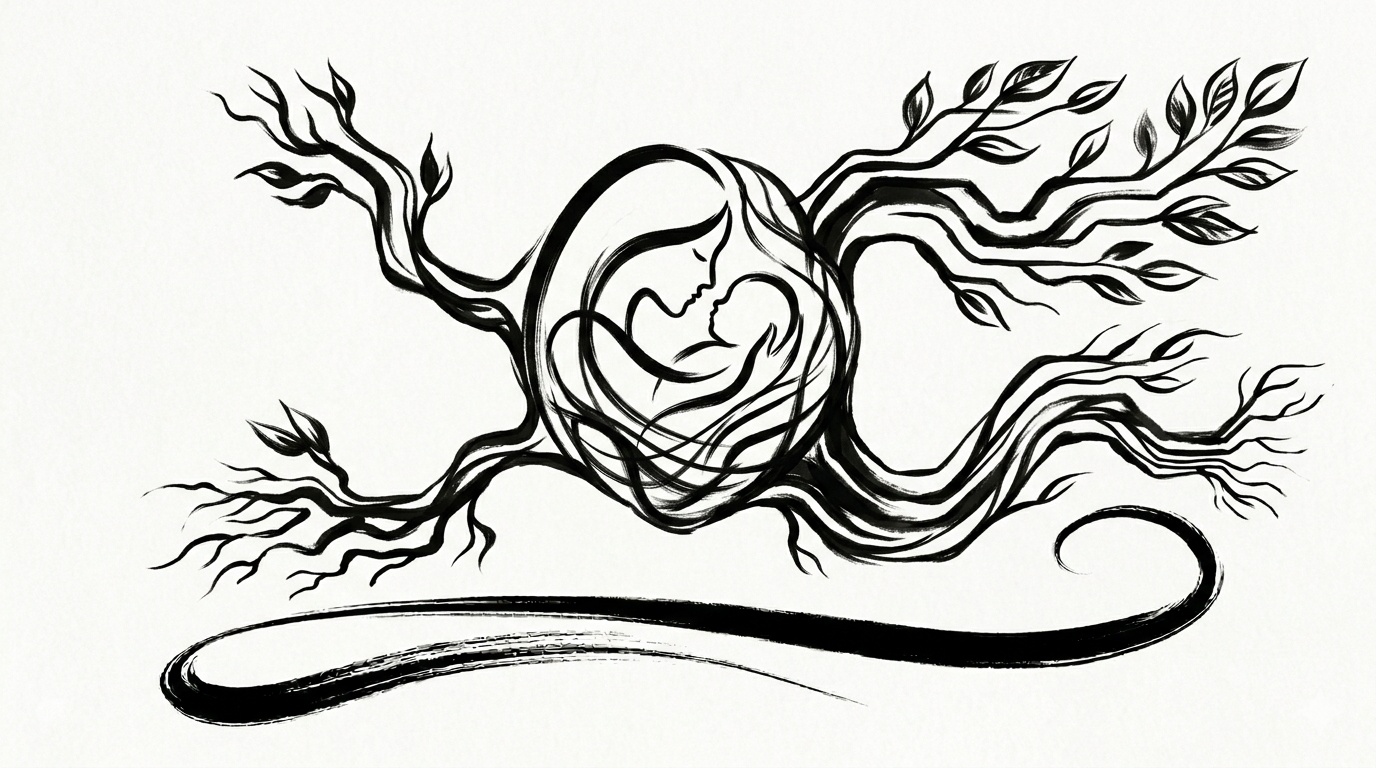
It was first coined by the anthropologist Dana Raphael in the 1970s, and it describes the process of becoming a mother. The psychological, neurological, hormonal, relational, and identity-level transformation that happens when a woman moves into motherhood. Not the moment of birth itself, but the whole process, before, during, and long after.
The reason I bring it up so often in my practice is simple. When people understand that what they’re going through has a name, that it is a recognised and profound human transition rather than a sign that something is wrong with them, something shifts. The self-criticism softens a little and the panic about not feeling like themselves quiets down. This makes it possible to actually look at what’s happening, with some curiosity rather than alarm.
The adolescence nobody told you about
The closest parallel we have to matrescence is adolescence. We all understand, at least in principle, that adolescence is a period of significant identity reorganisation. The person who comes out the other side is not the same as the person who went in. We expect turbulence. We make allowances for it. We don’t tell a fifteen-year-old that they should have this figured out by now.
But we do say that to new mothers. All the time.
Like adolescence, matrescence involves a fundamental reshaping of who you are. Your brain is literally changing. Research published in the last decade has shown significant grey matter changes in the maternal brain during the perinatal period, changes that are thought to support attunement to the baby, but that also mean the brain you’re operating with now is genuinely different to the one you had before.
Your sense of self is shifting. Your priorities are being renegotiated, sometimes willingly, sometimes not. Your relationships are changing. Your body is different. Your relationship with time, with work, with pleasure, with your own needs, all of it is being reorganised around something enormous that has arrived in your life.
That is not a small thing. And it doesn’t happen overnight.
The grief that nobody mentions
Here’s the part that I think is most underspoken, and that I want to say clearly: matrescence involves loss as well as gain.
Becoming a mother means leaving behind a version of yourself. The woman who could make spontaneous decisions, who had uninterrupted sleep, who had a clear sense of where she ended and another person began. That version of you doesn’t simply pause while you have children and then resume. She changes. Some of what you lose you will grieve genuinely, and that grief is legitimate.
In Ireland, there’s very little space for this. The cultural script around new motherhood is almost entirely focused on gratitude and joy. Those things are real too … but so is the loss. When we’re not given language for it, or permission to feel it, it tends to come out sideways, as irritability, as numbness, and as resentment that then generates shame because you’re not supposed to feel that way about something you chose and wanted.
I sit with this a lot in my work. The mother who loves her child completely and also misses her old life and cannot say so out loud because she’s afraid of what that makes her. It makes her human.
The identity question
One of the most disorienting aspects of matrescence is the shift in identity. Before having a baby, most people have a reasonably stable sense of who they are. Their work, their friendships, their interests, their place in their social world, these things give shape to a self.
And then a baby arrives and almost all of that is disrupted at once. Maternity leave removes the professional identity. Sleep deprivation affects cognitive function and emotional regulation. Social life diminishes and the body becomes new and unfamiliar. And in the middle of all of this, there is a small person who needs you completely, which means your own needs move to the back of a very long queue.
The question “who am I now?” is not a sign of a mental health crisis. It is the central question of matrescence. And it deserves to be taken seriously rather than brushed aside with reassurances that it’ll all settle down once the baby sleeps through.
What matrescence looks like in practice
In my clinical work, matrescence shows up in all kinds of ways. Sometimes it looks like postnatal depression or anxiety, because the transition has been so destabilising that the nervous system has gone into shutdown or high alert. Sometimes it looks like relationship strain, because both partners are changing and not necessarily in the same direction or at the same pace. Sometimes it looks like a loss of confidence that surprises people who were high-functioning and certain of themselves before having a baby.
Sometimes it looks like rage, which is probably the most taboo thing a new mother can feel, and also one of the most common. The rage of a woman whose needs are consistently last, whose sleep deprivation is treated as unremarkable, and whose identity has been reorganised around another person’s survival with very little acknowledgment of what that costs.
And sometimes matrescence looks like a quiet, private grief that the person can’t quite locate or explain. Just a sense that something has been lost that they can’t get back, and they don’t feel they’re allowed to mourn it.
The Irish context
In Ireland, the cultural expectation around motherhood remains heavily weighted toward selflessness. A good mother gives everything and she doesn’t complain. She certainly doesn’t grieve the loss of her previous self, because that would seem ungrateful, or like she didn’t really want this.
What that means in practice is that the internal experience of matrescence (the confusion, the grief, the identity disruption) tends to be carried privately. Women tell me things in therapy that they have never said to their partners, their mothers, or their closest friends. Not because those people wouldn’t care, but because there’s no script for it and no socially acceptable way to say “I love my child and I am also lost.”
That silence is something I want to push back against, gently but consistently. Because the more we can name what matrescence actually involves, the less alone each individual woman feels inside it.
Matrescence is not a problem to be fixed
This is important. Matrescence is a transition. A profound, disruptive, and meaningful transition. The goal of therapy in this context is not to return you to who you were before, because that person is gone, and that’s not a tragedy, even when it feels like one.
The goal is to help you find your footing in who you are becoming: To make sense of what has changed, to grieve what needs to be grieved, to find a new sense of self that has room in it for both the mother and the person who existed before she became one.
That work takes time. It is not linear, but it is possible, and it is worth doing.
How I can support you
I’m a perinatal psychotherapist based in Co. Wicklow, working online with mothers and parents across Ireland. If you’re in the middle of matrescence and finding it harder than you expected, or if you’ve been struggling to put words on something that feels just out of reach, therapy can offer a space to do that slowly and without judgment.
You don’t have to be in crisis to come. Sometimes you just need somewhere to figure out who you are now.